
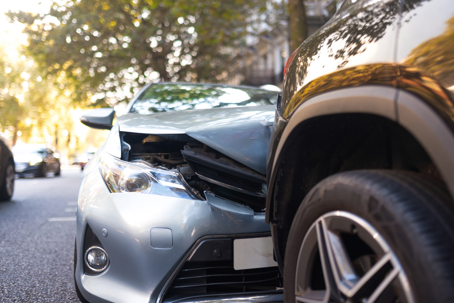
Florida’s new crash reporting law took effect on October 1, 2026, and it changes one of the first decisions you make after a collision: whether to call the police. Under Senate Bill 488, drivers are only required to immediately report a crash to law enforcement when it causes injury or death, or when apparent property damage reaches $2,000 — up from the old $500 threshold. The change is meant to free up officers for higher-priority calls. But for drivers, it shifts a lot of responsibility onto the people standing at the side of the road, and it raises a question every Floridian should think about now: what happens to your claim if you skip the police report and later discover you were hurt?
What SB 488 Actually Changes
SB 488 is a broad transportation bill, signed into law as Chapter 2026-39 of the Laws of Florida, and the crash reporting provision is the part most drivers will feel. Here is the core of it:
- Higher threshold: Crashes with apparent property damage under $2,000 no longer require an immediate call to police on that basis alone. The old trigger was $500.
- Injuries and deaths still count: Any crash involving an injury or a death must still be reported immediately to local police, the county sheriff, or the Florida Highway Patrol — no matter how small the vehicle damage looks.
- Your other duties remain: You must still stop, exchange information with the other driver, document the scene, and — when no officer writes a report — file your own Driver Report of Traffic Crash with the Florida Department of Highway Safety and Motor Vehicles (FLHSMV) within 10 days.
In other words, the law didn’t eliminate your obligations after a crash. It changed who is responsible for creating the official record — and in many minor collisions, that responsibility now falls on you.
The $2,000 Problem: Damage Is Harder to Judge Than It Looks
The new threshold assumes drivers can accurately estimate damage at the scene. Mechanics say that is far easier said than done. In reporting by WINK News in Fort Myers, local body shop technicians explained that even a single scratch can require refinishing the fender and blending paint into the bumper and door — work that starts around $500 on its own. A small gouge in a modern bumper can run several thousand dollars once the bumper is replaced and its embedded sensors are recalibrated, with calibration alone adding hundreds more.
That is especially true for vehicles built after about 2010, which carry cameras, radar units, and parking sensors behind seemingly cosmetic panels. According to the same shop, this isn’t limited to luxury brands — everyday cars like Honda Civics and Toyotas fall into the same category. The shop reported repairing body damage that reached as high as $50,000. Its advice to drivers was blunt: “Do not take someone’s word they’re going to fix your car.”
The takeaway is simple. A crash that looks like a $1,000 fender-bender at the curb may turn out to be well over $2,000 once a technician removes the bumper cover. If you guess wrong and don’t call, you may lose the one document insurers rely on most.
Why This Matters for Your Injury Claim
For property damage, a missing police report is an inconvenience. For an injury claim, it can be a serious problem. As we explained in our article “Beyond the Police Report,” a police report is rarely the whole case — but it is often the starting point, and insurers routinely ask for one when evaluating fault and injuries. Here is where the new law creates risk:
- Injuries often show up later: Whiplash, back strain, and concussions frequently don’t announce themselves until hours or days after a crash. Two drivers who agree at the scene that “no one is hurt” may both be wrong — and by then, no officer was ever called.
- The PIP clock is still running: Florida’s Personal Injury Protection benefits generally require you to seek initial medical treatment within 14 days of the crash. Waiting to see if pain goes away can cost you coverage.
- Fault becomes your word against theirs: Without an officer’s report, a dispute over who ran the light or who changed lanes can come down to competing stories. Under Florida’s modified comparative negligence rule, an injured person found more than 50% at fault recovers nothing — so the quality of your evidence matters more than ever.
- Stories change: A driver who apologizes at the scene may tell their insurer something very different a week later. An agreement to “handle it privately” is not a legal record.
When You Should Still Call the Police
The law sets the minimum requirement — it does not prevent you from calling. In many situations, requesting an officer is the smart move even if damage appears to be under $2,000:
- Anyone feels pain, dizziness, or stiffness, even if it seems minor.
- You honestly can’t tell whether repairs will exceed $2,000 — which, on most modern vehicles, is nearly always.
- The other driver disputes fault, refuses to share information, or seems impaired.
- The other driver has no insurance or can’t produce proof of it.
- The crash involves a commercial vehicle, rideshare, or rental car.
- The other driver leaves, or tries to leave, the scene.
What to Do After Any Crash in Florida — Big or Small
Whether or not police respond, these steps protect both your health and your claim:
- Stop and check for injuries. Call 911 immediately if anyone is hurt.
- Exchange information. Get the other driver’s name, license, insurance, plate number, and vehicle details.
- Document everything. Photograph both vehicles from every angle, the road, signals, skid marks, and any visible injuries. Note nearby cameras, since surveillance footage can be overwritten within days.
- Get witness contact information. Independent witnesses carry real weight when no officer was present.
- File your self-report. If no officer writes a report, submit a Driver Report of Traffic Crash to FLHSMV within 10 days.
- See a doctor within 14 days. Even if you feel fine, prompt treatment protects your health and your PIP benefits.
- Get a professional repair estimate. Don’t rely on a roadside guess or the other driver’s promise to pay.
- Talk to an attorney before giving a recorded statement. Insurers may call quickly; you are generally not required to give the other driver’s insurer a recorded statement.
A Note for Immigrant Drivers
We know some members of our community hesitate to call police after a crash. Every situation is different, and you should never ignore a legal duty to report. What every injured driver should know is this: if another driver caused your injuries, you may have the right to pursue compensation, and a licensed attorney can explain your options confidentially before you make decisions about your claim. Our team serves clients in English, Spanish, Portuguese, and Haitian Creole.
The Bottom Line
Florida’s new $2,000 threshold means fewer officers at minor crash scenes — and more crashes with no official record at all. That may save time on the day of the accident, but it can cost injured drivers dearly weeks later. When in doubt, call, document, get checked out, and get advice before you deal with any insurance company. The Law Offices of Sekou Clarke helps injured drivers in Orlando, Panama City Beach, and across Florida build the evidence their claims need.
HURT IN A “MINOR” CRASH? DON’T GUESS — GET ADVICE.
Under Florida’s new $2,000 threshold, more crashes will go unreported to police. If you were injured, or the other driver is disputing what happened, the Law Offices of Sekou Clarke can help you protect your claim before key evidence disappears.
Call us today at (407) 269-8774 to schedule a consultation.
Our offices are located in Orlando, FL, Panama City Beach, FL, New York, NY, and Kingston, Jamaica.