
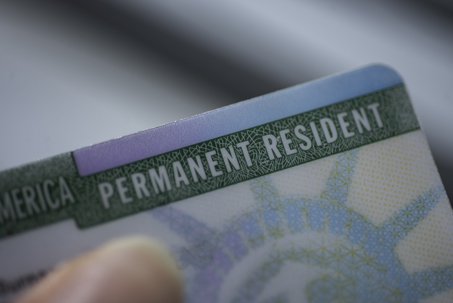
If you're a conditional green card holder in 2026 in Florida right now, things have gotten a lot more complicated. We at the Sekou Clarke Law Group been practicing immigration law for years, and what we’re seeing this year with ICE scrutiny Florida green card holders are facing is unlike anything we’ve witnessed before. The rules haven't necessarily changed, but how aggressively they're being enforced, is a whole different ballgame.
As an immigration attorney with offices in Orlando, Panama Beach, New York, and Kingston, we have a front-row seat to how this enforcement upsurge is affecting real families. People who thought they were doing everything right are suddenly finding themselves in removal proceedings and facing other risks. Let's talk about the five major ways this ICE scrutiny Florida green card holders are experiencing is turning the immigration landscape upside down.
They're Monitoring Your Family Relationships with a Magnifying Glass
Here's something catching people off guard: USCIS is now actively investigating whether you've had children with someone other than your spouse. If you're a conditional green card holder and you have a child with someone who isn't your spouse—whether before filing Form I-751 or while it's pending—USCIS can issue a Notice to Appear, deny your I-751, or rescind your conditional status entirely. Additionally, the government sees this as evidence that your marriage might not be genuine, and they're no longer giving people the benefit of the doubt.
Filing for Citizenship Can Put You Directly in the Crosshairs
Many of our clients file for naturalization (Form N-400) while their I-751 is still pending. We get that you want to move your proceedings forward, and technically, you're allowed to do this. But you're inadvertently putting yourself under a microscope. When you file that N-400, you typically get a combined interview where USCIS examines both applications at once. Furthermore, you still have to prove that your original marriage was entered into in good faith. If the immigration officer isn't convinced—even if your marriage is completely legitimate—they can deny both applications and immediately start removal proceedings. That's not a delay. That's straight to deportation proceedings.
Your Marriage Status Changed? You Better Act Fast
This one is huge. In the past, if you filed a joint I-751 petition with your spouse and then separated or divorced before your interview, USCIS might give you a chance to amend your filing during the interview itself. The government used to show some flexibility. Not anymore.
Current enforcement trends show that USCIS is done giving second chances. If your marital status changes—whether it's a separation, abandonment by your spouse, or a divorce—and you don't immediately amend your petition to switch from a joint filing to a waiver filing, they're denying the case and fast-tracking you into removal proceedings. There's no grace period. It's denial and deportation proceedings, often within weeks.
Evidence Standards Have Skyrocketed
The bar for what constitutes "sufficient evidence" of a good faith marriage has gotten significantly higher. What might have been acceptable proof a few years ago—joint bank accounts, some photos, maybe a lease in both names—isn't cutting it anymore.
USCIS officers are looking for comprehensive documentation spanning the entire relationship. They want to see the progression of your relationship, financial intermingling, social integration, and future planning documents—basically, a paper trail that would be nearly impossible to fake. And if you can't provide that level of detail? You're risking denial and removal proceedings.
The Timeline for Everything Has Accelerated
Here's something that might actually sound like good news at first: things are moving faster. The bad news? Speed works against you when it comes to denials and removal proceedings. USCIS is processing cases more quickly, but they're also making faster decisions to deny applications and issue Notices to Appear. Where you might have had months to gather additional evidence in the past, now you might have weeks or days. Moreover, once you're in removal proceedings, the deportation machine moves quickly.
What You Can Do to Protect Yourself
The reality is that conditional green card holders in Florida are facing unprecedented scrutiny. Fortunately there are concrete steps you can take right now:
First, if your marital situation changes in any way, file an amendment immediately. Don't wait for your interview. File to switch from a joint petition to a waiver petition the moment you separate or if your spouse abandons you.
Second, gather evidence like your life depends on it—because your ability to stay in this country might. Bank statements, utility bills, insurance policies, tax returns, photos, text messages, emails, travel records, medical records. The more comprehensive your documentation of a good faith marriage, the better.
Third, and I can't stress this enough: consult with an experienced immigration attorney before making any moves. The current enforcement environment is too risky to navigate alone. One wrong step can result in removal proceedings.
Don't Wait Until It's Too Late
At Sekou Clarke Law Group, we've been helping conditional green card holders navigate these exact situations. We have offices in Orlando, Panama Beach, New York, and Kingston because we understand that immigration issues affect families across multiple locations.
We've seen firsthand how the increased scrutiny is playing out in real cases, and we know what USCIS is looking for. More importantly, we know how to build a case that stands up to this heightened level of review. Whether you're preparing to file your I-751, your circumstances have changed, or you're facing a denial, we can help.
The enforcement environment isn't going to get easier. The time to act is now—before you're facing a Notice to Appear, before your I-751 gets denied, before you're in removal proceedings trying to figure out how to stay in the country.
Your immigration status is too important to leave to chance. Call the Sekou Clarke Law Group today at (407) 269-8774 to schedule an appointment. Let's review your situation, discuss your options, and develop a strategy to protect your green card status. In this environment, being proactive isn't just smart—it's essential. Don't wait until you're in crisis mode to get help.
Source: "USCIS Is Targeting Conditional Green Cards in 2025: 3 Red Flags That Can Get Your I-751 Denied." YouTube, uploaded by Sekou Clarke, 10 Dec. 2025, https://www.youtube.com/watch?v=CX29E3bjaeY. Accessed 18 Jan. 2026.