Independent evidence in car accident cases has never been more accessible—or more essential—than it is in 2026. If you have been involved in a motor vehicle accident in Florida or New York, relying solely on a police report to establish fault is no longer sufficient. Surveillance technology, onboard vehicle systems, and digital infrastructure now generate a wealth of objective data that can prove negligence, contradict false accounts, and dramatically strengthen your personal injury claim. Understanding how to preserve and leverage this evidence could be the difference between a full recovery and a denied claim.
The Limits of the Police Report
Police reports have long served as the foundational document in accident claims. Officers record their observations, note traffic violations, and in many cases assign a preliminary finding of fault. However, officers rarely witness accidents firsthand. Their reports are based on post-collision scene conditions, driver and witness statements, and physical evidence that may already be disturbed by the time they arrive.
In a classic "he-said, she-said" dispute, one driver claims the other ran a red light; the other driver denies it. The officer, having arrived after the fact, makes an educated judgment—but that judgment is not binding on an insurance company or a court. Opposing attorneys will challenge it. Insurers will use ambiguity as grounds to reduce or deny your payout. In 2026, accepting a disputed narrative without independent corroboration is a strategic mistake no injured victim should make.
Dashcam Footage: Your Best Eyewitness
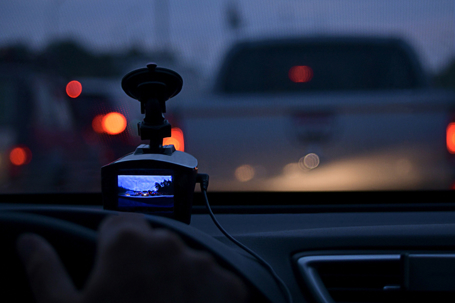
Dashboard cameras have become one of the most powerful tools available to accident victims. Mounted on a vehicle's windshield or rearview mirror, dashcams continuously record the road ahead—and increasingly, the rear and sides of the vehicle as well. When an accident occurs, the footage provides a real-time, unbiased account of exactly what happened in the moments leading up to the collision.
Dashcam footage can document:
- The speed and trajectory of both vehicles before impact
- Whether a driver ran a red light, failed to yield, or crossed the center line
- Aggressive or erratic driving behavior prior to the crash
- Road and weather conditions at the moment of the accident
- The immediate aftermath and positions of vehicles post-collision
If you have a dashcam, secure the footage immediately after an accident—most cameras record on a loop and will overwrite older files. If the other driver or a nearby business had a dashcam, your attorney can issue a preservation letter to prevent that footage from being deleted.
Event Data Recorders: The Black Box in Your Car
Most drivers are unaware that the vehicle they drive already contains a built-in data recorder. Event Data Recorders (EDRs)—commonly referred to as vehicle "black boxes"—are standard equipment in nearly all modern passenger vehicles. In the seconds before, during, and after a crash, EDRs capture critical technical data that provides an objective account of vehicle performance.
Typical EDR data includes:
- Vehicle speed at the time of impact
- Whether brakes were applied and brake force levels
- Throttle position (was the driver accelerating?)
- Steering wheel angle and inputs
- Seatbelt usage and airbag deployment timing
- Engine RPM and cruise control status
In Florida personal injury cases, EDR data has been used to disprove claims that a driver was traveling at the speed limit when they were actually speeding, or to confirm that a driver never attempted to brake before impact. Extracting this data requires specialized hardware and software, and must be done before the vehicle is repaired or totaled. Your attorney should move quickly to obtain a litigation hold on the at-fault vehicle if EDR data may be relevant.
Traffic Cameras and Surveillance Footage
Florida's road network is among the most camera-monitored in the country. From the Florida Department of Transportation's SunGuide traffic management cameras to municipal red-light enforcement systems and private security cameras on adjacent businesses, video evidence of an accident is often available if sought quickly enough.
Types of external camera footage to pursue:
- FDOT and city traffic management cameras at major intersections
- Red-light camera systems operated by local municipalities
- Retail and commercial property surveillance cameras near the crash site
- Gas station and ATM cameras with direct lines of sight to the road
- Residential doorbell cameras (Ring, Nest, etc.) along the accident route
- School zone cameras and transit authority cameras on bus lines
Critically, most surveillance footage is retained for only 24 to 72 hours before being automatically overwritten. Government agencies may hold footage slightly longer, but access requires a formal public records request or legal subpoena. Acting within the first 24 to 48 hours after an accident is essential to preserving this evidence.
Additional Digital Evidence Sources
Beyond cameras and black boxes, several other digital sources can corroborate your account of an accident:
- Cell phone records: Subpoenaed records can confirm whether the at-fault driver was texting or on a call at the time of the crash—a finding that can support a claim for punitive damages in Florida.
- GPS and navigation app data: Apps like Google Maps and Waze log location, speed, and route data that can confirm a driver's path and pace.
- Telematics and insurance apps: Programs like Progressive's Snapshot or State Farm's Drive Safe & Save record speed, braking, and cornering data—data that may be subpoenable in litigation.
- Social media posts: Photos, check-ins, or videos posted by the at-fault driver shortly before the crash can help establish distracted driving or impairment.
What You Should Do Immediately After an Accident
To protect your right to independent evidence:
- Call 911 and secure the scene—do not move vehicles if possible
- Photograph every angle of the vehicles, road markings, traffic signals, and skid marks
- Note the location of any nearby cameras (storefronts, traffic lights, homes)
- Collect contact information from all witnesses
- Do not give a recorded statement to the other driver's insurer
- Contact an attorney before authorizing vehicle repairs or total-loss processing
An experienced personal injury attorney will act immediately to send preservation letters to relevant parties, subpoena digital records, and engage accident reconstruction experts who can analyze the full scope of available evidence.
In 2026, the truth of an accident is rarely a mystery—it is a matter of whether the evidence is preserved and properly presented. The Law Offices of Sekou Clarke has the experience and the urgency your case demands. If you or a loved one has been injured in a motor vehicle accident in Orlando, Panama City Beach, or the surrounding areas, do not wait. The evidence that proves your case may only exist for hours.
INJURED IN AN ACCIDENT? ACT NOW.
Critical digital evidence disappears within 24–72 hours. The Law Offices of Sekou Clarke will move immediately to secure the evidence your case needs.
Call us today: (407) 269-8774
Serving Orlando • Panama City Beach • New York • Kingston, Jamaica