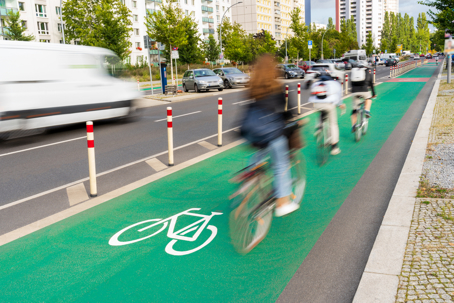
The skyline of Central Florida is changing, and it isn’t just the new high-rises in Orlando or the sprawling developments in Panama City Beach. If you look at the bike lanes, trails, and even the sidewalks, you’ll see a quiet revolution on two wheels. However, this revolution has brought with it a surge in hospital visits and legal disputes. As an authoritative voice in Personal Injury and Immigrant Rights, the Sekou Clarke Law Group has monitored the legislative response to this trend with precision. Florida’s 2026 e-bike laws have moved from a vague framework to a strict, tiered system that fundamentally changes how liability is determined after a collision. Whether you are a motorist, a pedestrian, or an e-bike rider, understanding these rules is the only way to protect your rights and your recovery in 2026.
At the Sekou Clarke Law Group, we serve clients in Orlando, Panama City Beach, New York, and Kingston, Jamaica. We know that a single accident can disrupt your livelihood and, for some, create unwanted scrutiny of your status. This guide is designed to provide the clarity you need to navigate the aftermath of an e-bike accident under the state’s newest statutes.
Understanding the Three-Tiered Class System
The most significant aspect of the 2026 updates is the formalization of "E-Bike Classes." In a legal claim, the first question we ask is: "What was the machine?" Florida now recognizes three distinct classes, and the rules of where they can go—and how fast—are entirely different.
- Class 1: These are pedal-assist only. The motor only kicks in when you are pedaling and stops assisting once you hit 20 mph.
- Class 2: These have a throttle. You don’t have to pedal at all to move, but the motor still cuts off at 20 mph.
- Class 3: These are the high-performance models. They are pedal-assist only but can reach speeds of 28 mph.
Why this matters for your claim: If you were in a car and were hit by an e-bike, or if you were an e-bike rider hit by a car, the class of the bike dictates the "Rules of the Road" that were supposed to be followed. For example, many local Central Florida ordinances now ban Class 3 e-bikes from sidewalks and certain multi-use trails because they are essentially "electric mopeds" in the eyes of the law. If a rider was on a Class 3 bike on a sidewalk where they were prohibited, their "percentage of fault" in an accident increases significantly.
Central Florida’s Local Rebellion: Speed Limits and Trail Rules
While the state provides the framework, the 2026 session has granted unprecedented autonomy to local counties to set their own limits. As reported by Central Florida Public Radio, counties like Orange and Seminole are moving to implement specific speed caps on multi-use paths—often as low as 15 or 20 mph.
As a result, a rider could be "legal" under state law but "illegal" under a local county ordinance. This creates a patchwork of rules that an inexperienced attorney might miss. At the Sekou Clarke Law Group, we investigate local municipal codes in Orlando and surrounding areas to see if a violation of a local speed mandate occurred.
- Sidewalk Safety: In many parts of Florida, e-bikes are allowed on sidewalks unless a local ordinance says otherwise. However, they must yield the right-of-way to pedestrians and give an audible signal before passing.
- The "Slow-Down" Mandate: New rules require e-bikers to slow to a walking speed when approaching pedestrians in congested areas. Failure to do so is now considered "prima facie" evidence of negligence in a 2026 personal injury claim.
Liability and the 51% "Fault Cliff"
Perhaps the most critical change for Florida drivers and riders is the shift to Modified Comparative Negligence. As we have discussed in our analysis of HB 837, Florida no longer allows you to recover damages if you are more than 50% at fault.
In an e-bike vs. automobile accident, the insurance companies will fight tooth and nail to push the other party over that 51% threshold.
- For the Motorist: If an e-bike rider was "weaving" through traffic or riding a Class 3 bike on a sidewalk, we use that evidence to protect you from being held liable.
- For the E-Bike Rider: If a motorist failed to yield at a "yield to bikes" crossing or was distracted by their phone, we gather the high-tech surveillance data—including the license plate readers and surveillance towers we’ve identified in Lee and Polk counties—to prove the driver’s negligence.
The "51% Rule" means that the quality of your evidence is the difference between a multi-million dollar recovery and getting nothing at all.
The Insurance Gap: Are You Actually Covered?
One of the most dangerous myths in 2026 is that your car insurance or your homeowner's insurance will automatically cover an e-bike accident.
- PIP (Personal Injury Protection): In Florida, e-bikes are generally NOT considered "motor vehicles." This means that if you are an e-bike rider hit by a car, you may be able to access the car driver’s PIP for your medical bills. However, if you hit a pedestrian while on your e-bike, your own car’s PIP may not cover you.
- The E-Bike Policy: Many riders are now opting for specialized e-bike insurance. Without it, you could be personally liable for tens of thousands of dollars in medical bills if you are found at fault in a collision.
Essential Steps After an E-Bike Collision
If you are involved in an accident involving an e-bike in 2026, follow this authoritative checklist:
- Identify the Class: Take a photo of the e-bike’s motor and any stickers that identify it as Class 1, 2, or 3. This is the "smoking gun" of liability.
- Document the Speed: Check if there are any nearby "speed feedback" signs or surveillance towers that might have recorded the speed of the bike or the car.
- Check for "App Data": Many e-bikers use apps like Strava or specialized manufacturer apps that record their speed and GPS path. This data is discoverable in a lawsuit.
- Police Report: Ensure the officer notes the specific class of e-bike in the report. If they don't, it may be harder to prove a local ordinance violation later.
Why Choose the Sekou Clarke Law Group?
The intersection of e-bike technology, new Florida statutes, and high-tech surveillance requires a firm that isn't just "practicing law"—we are pioneering it. We understand the nuances of Central Florida’s local ordinances and the federal implications for our immigrant clients. We don't just see a case; we see a life that needs protecting.
You should not let an insurance adjuster tell you that you are "at fault" based on outdated laws. Your first step toward recovery is calling an authority who knows the 2026 playbook.
Contact Us Today
Do not let a "modern" accident be handled with "old" legal strategies. The clock on your two-year filing deadline is already ticking.
Call us today at (407) 269-8774 to schedule an appointment.
We serve clients in:
- Orlando, Florida
- Panama City Beach, Florida
- New York, New York
- Kingston, Jamaica.