
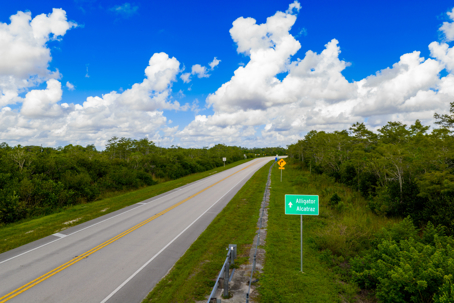
The landscape of immigration enforcement in the Sunshine State has hit a dramatic and unexpected turning point. As a premier legal authority on deportation defense and immigrant advocacy, the Sekou Clarke Law Group is closely monitoring the sudden announcement that the state is preparing to dismantle its most controversial soft-sided containment facility. The impending closure of "Alligator Alcatraz"—the massive, short-lived temporary detention camp constructed deep within the Florida Everglades—offers a critical lens into the current state of immigration practices in Florida in 2026. While advocacy and environmental groups are rightfully viewing this shutdown as a victory, families across the state must understand that a change in physical facilities does not signify a softening of state resolve. Rather, it reveals the severe logistical, environmental, and financial fractures forming within the state's aggressive enforcement machine. Whether you are seeking counsel in Orlando, Panama City Beach, New York, or Kingston, Jamaica, our firm is prepared to help you navigate the profound ripple effects of this operational shift.
The Logistical and Environmental Collapse of the Swamp Camp
To understand why Alligator Alcatraz is closing less than a year after its highly publicized, eight-day emergency construction, one must look at the sheer impossibility of its location. Built in the middle of the Everglades, the facility was designed to act as a massive center capable of holding roughly 1,400 detainees at its peak.
However, operating a high-security prison in a delicate wetland environment immediately triggered a multi-front war for state administrators. Environmental groups, including the Center for Biological Diversity and Friends of the Everglades, alongside the Miccosukee Tribe of Florida, launched aggressive federal lawsuits challenging the legality of the camp’s construction. The legal complaints cited severe violations of state and federal conservation laws, pointing out that the infrastructure disrupted protected habitats and threatened local water safety.
Furthermore, the physical vulnerabilities of the camp became impossible to ignore. Department of Homeland Security (DHS) officials openly acknowledged that the facility was a disaster waiting to happen, highly susceptible to the region’s active wildfire zones and notorious hurricane seasons. In an enforcement climate that prizes total control, a facility that could be wiped out or evacuated by a single tropical storm became a legal and operational liability.
The Financial Black Hole: $1.2 Million a Day
While humanitarian and environmental concerns dominated public discourse, the true death blow for Alligator Alcatraz was economic. Data revealed during public records lawsuits exposed a staggering reality: the Everglades facility cost an estimated $1.2 million per day to operate.
The remote location meant that every basic necessity had to be trucked into the swamp at premium commercial rates. For instance, the state initially authorized a staggering $90 million contract purely for portable toilets and sewage removal. Total operational costs quickly escalated toward a breathtaking $1 billion, far exceeding the state's initial public budget projections.
Governor Ron DeSantis and the Florida Division of Emergency Management (FDEM) aggressively pursued federal reimbursement through FEMA and DHS to offset these costs. However, a major administrative conflict emerged when federal authorities denied the bulk of the reimbursement requests, leaving the state's Emergency Preparedness and Response Fund severely depleted. The state simply could not sustain a billion-dollar, remote containment strategy without federal capital backing the bill.
Where Do the Detainees Go? The Invisible Relocation Threat
With vendors officially notified that the last detainees must be removed by June 2026, a new crisis has emerged for the families of the 1,400 individuals currently held inside. The closing of a facility does not mean the release of its occupants.
Under federal immigration protocols, Immigration and Customs Enforcement (ICE) has total legal authority to transport detainees to any available facility within their national network. For Florida families, this means their loved ones are currently facing sudden, unannounced transfers to alternative detention centers across the state or deep into the American interior. In the worst-case scenarios, individuals are being fast-tracked for deportation to clear out the facility before the demobilization teams begin tearing down the fencing and trailers.
This creates an incredibly dangerous window for families. When a relative is abruptly moved from a facility in South Florida to a center in a different state, tracking their case numbers, securing localized legal counsel, and maintaining contact becomes infinitely harder. Gaps in communication during these massive logistics shifts are precisely when deportations are executed without proper administrative review.
The Decentralized Shift: The New Face of Enforcement
It is a dangerous misconception to assume that the closure of Alligator Alcatraz means Florida is backing away from its hardline stance on immigration. In reality, the current state of immigration practices in Florida is shifting from a centralized, temporary camp model to a highly decentralized, high-tech local surveillance network.
As we have documented, the state has already allocated hundreds of millions of dollars to local law enforcement through the State Board of Immigration Enforcement (SBIE). Millions are being funneled into counties like Lee, Polk, and Osceola to purchase AI-translation body cameras, license plate readers, and jail processing equipment.
The Strategic Pivot: Instead of spending $1.2 million a day to house people in the Everglades, the state is turning your local county jail into a miniature detention center and your local sheriff's deputy into an extension of ICE. The physical structure of Alligator Alcatraz may be disappearing, but the digital net cast across Florida's highways and neighborhoods is expanding.
How the Sekou Clarke Law Group Protects Your Family
During this massive logistical shuffle, you cannot afford to wait and see where the system deposits your loved one. The Sekou Clarke Law Group provides the aggressive, authoritative intervention required to halt the momentum of sudden transfers and fast-tracked deportations.
- Locating and Tracking Detainees: If your relative was housed at Alligator Alcatraz and you have suddenly lost contact, our legal team utilizes priority channels to locate them within the federal system before they are moved out of state.
- Filing Emergency Stays of Removal: We file immediate motions to halt deportations that are being rushed through during the facility's deconstruction phase.
- Challenging Local Jurisdiction Overreach: As enforcement shifts back to local county sheriffs funded by the SBIE, we aggressively challenge pretextual traffic stops and unlawful detentions based on automated surveillance tech.
- Comprehensive Defense for Mixed-Status Homes: We implement robust asset protection and legal safeguards for families navigating the financial restrictions introduced in the 2026 legislative session.
The system relies on speed and confusion to achieve its goals. By inserting a dedicated, knowledgeable legal authority into the process, we force the state and federal agencies to respect your constitutional rights.
The closing of Alligator Alcatraz is proof that the legal terrain in Florida shifts rapidly, but the threat of deportation remains constant. Protect your family from the chaos of sudden facility transfers.
Call us today at (407) 269-8774 to schedule an appointment. We serve clients in Orlando, Panama City Beach, New York, and Kingston, Jamaica. Your truth, your freedom, and your justice are our priorities.