Remember when a fender-bender used to come down to two drivers, a police report, and whatever a handful of witnesses remembered a week later? Well today, that is no longer how most Florida crashes get resolved. In this new day of technology, digital evidence in Florida accident claims often carries as much weight as the officer's report itself. A rear-end collision on a busy Orlando corridor might be captured from four separate angles before the first responder even arrives: a delivery van's dashcam, a homeowner's doorbell camera, a signal camera at the intersection, and the injured driver's own smartwatch, which quietly logged a spike in heart rate the instant of impact.
None of that evidence shows up on its own. It has to be located, requested, and locked down before it disappears, and in many cases that window closes within days, not months.
Six Sources of Digital Evidence Shaping Accident Cases
Attorneys handling Florida crash and injury claims are now building cases around a much wider evidence pool than a decade ago. Six sources come up again and again:
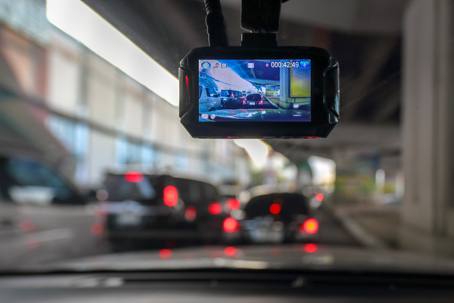
- Dashcam footage: A forward- or rear-facing camera can capture the exact moment of impact, showing speed, lane position, and who ran the light. Most units record on a loop, which means the clip can be gone within hours unless someone saves it.
- Doorbell cameras: Ring, Nest, and similar devices mounted on nearby homes frequently catch collisions that happen on residential streets or at driveway entrances, sometimes from an angle no dashcam could ever reach.
- Traffic cameras: Intersection and municipal traffic cameras can confirm signal timing, vehicle speed, and the sequence of events, though footage from these systems is often overwritten quickly and generally requires a formal records request.
- Cell phone location data: GPS pings, mapping app history, and carrier records can place a driver's phone in active use at the moment of a crash, supporting or undercutting a distracted-driving claim.
- Smartwatch health data: Devices like an Apple Watch or Fitbit log heart rate, movement, and sudden stillness. That data can help establish exactly when an injury occurred and how a person's activity changed afterward.
- Social media posts: Check-ins, photos, and activity updates are routinely reviewed by insurance adjusters looking for anything that seems to contradict a claimed injury, which makes what a person posts after a crash just as important as what happened during it.
Why Preservation Cannot Wait
Digital evidence is fragile in a way paper records never were. Dashcams and home security systems typically run on loop recording, automatically overwriting old footage once the memory card fills up. Business and municipal surveillance systems often purge video within days. Cell carriers generally retain location data for a limited window, commonly cited at somewhere between six and eighteen months, and only release it through a proper legal request.
This is why attorneys often advise clients to preserve digital evidence immediately after an accident, before automatic deletion settles the question for them. In practice, that means saving the dashcam's memory card rather than letting the device keep recording over it, downloading doorbell footage to a separate device or cloud account, and identifying which nearby homes or businesses might have their own cameras pointed at the scene. An attorney can also send a formal preservation letter, sometimes called a spoliation notice, putting a property owner or company on notice that they have a legal duty to retain footage rather than let it cycle out with routine deletion schedules. In litigation, this same step is often called a litigation hold.
How Florida Courts Treat This Evidence
Florida's evidence rules do not single out digital evidence for special treatment; instead, the same relevance standard applies, meaning the material must tend to prove or disprove a fact that actually matters to the case. Florida courts have been willing to allow electronic records, including social media content, when that standard is met. In the widely cited case Nucci v. Target Corp., Florida's Fourth District Court of Appeal held that a plaintiff's private Facebook photographs were discoverable in a slip-and-fall case, reinforcing that privacy settings do not automatically shield social media content from a defense request.
Before any of this evidence reaches a jury, it typically has to be authenticated, meaning someone establishes that the video, photo, or data record is genuine and has not been altered. That can involve testimony from the person who captured it, metadata review, or in more contested cases, a forensic expert who can speak to how the footage or data was generated and stored.
Protecting Your Claim After a Crash
A few practical habits make a meaningful difference in whether this kind of evidence is available later. Save your own dashcam footage the same day, rather than assuming it will still be there next week. Take photos and videos at the scene rather than relying on memory. Note which nearby homes or businesses appear to have cameras. Avoid posting about the crash, your injuries, or your recovery on social media, since even an innocent photo can be used to argue that an injury is less serious than it is. And do not delete anything, even a post you regret, since removing content after a claim has started can itself create legal problems.
Perhaps most importantly, loop in an attorney early. A lawyer who knows to ask about dashcams, wearable devices, and nearby surveillance within the first days after a crash has a far better chance of locking that evidence down before it is gone for good.
Have you been injured in an accident with digital evidence at stake?
Footage and data can disappear within days. The Law offices of Sekou Clarke can move quickly to identify and preserve dashcam, doorbell, traffic camera, and device evidence that supports your claim. Call (407) 269-8774 for a consultation. We have offices in Orlando, Panama City Beach, New York, and Kingston, Jamaica ready to serve you.