
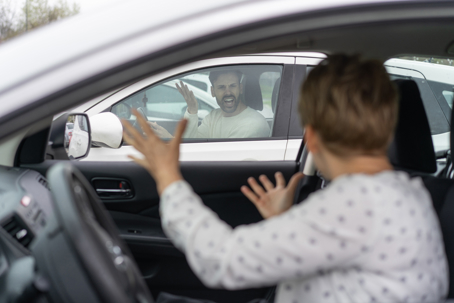
Road rage in Florida is no longer an occasional bad interaction on I-4 or the Turnpike — it is a fast-growing, sometimes deadly problem on the state's roads. New data shows Florida posted the second-largest year-over-year increase in fatal road rage crashes of any state in the country, and drivers across Orlando, Panama City Beach, and beyond are feeling the effects firsthand. If you have been hurt by an aggressive driver, understanding both the scope of this problem and how to prove what really happened is critical to protecting your claim.
The Numbers Behind Florida's Road Rage Surge
A recent analysis of federal crash data from the Fatality Analysis Reporting System found that fatal road rage crashes in Florida jumped from 12 in 2023 to 36 in 2024 — a 200% increase, and the second-steepest rise of any state in the nation. Only Wyoming saw a larger percentage increase, though with FAR fewer total crashes.
The pattern is showing up across the state, not just in one city. Miami-Dade County alone reported dozens of road rage-related accidents and well over a hundred victims in early 2026, and South Florida has seen a string of road rage shootings in recent years, including incidents along I-95, in Doral, and in Boca Raton. Nationally, road rage incidents involving firearms have climbed sharply over the past decade, and researchers have pointed to Florida's permitless carry law as one contributing factor to the state's high rate of road rage shootings.
Florida's own highway safety officials have acknowledged the problem is outpacing enforcement capacity, with staffing shortages at the Florida Highway Patrol making it harder to respond to aggressive driving before it escalates. For drivers, that means personal preparation — knowing your rights and knowing how to preserve evidence — matters more than ever.
What Counts as Road Rage Under Florida Law
Road rage is not a single formal charge — it is a pattern of aggressive or retaliatory driving behavior that can support multiple civil and criminal claims depending on what happened. Conduct commonly associated with road rage includes:
- Tailgating or brake-checking another driver out of anger
- Weaving through traffic to cut off or box in another vehicle
- Excessive horn use, obscene gestures, or shouted threats
- Deliberately ramming or sideswiping another vehicle
- Exiting a vehicle to confront another driver, or brandishing a weapon
When aggressive driving causes a crash, the at-fault driver can be held civilly liable for the resulting injuries — and in more serious cases, may also face criminal charges such as assault, reckless driving, or aggravated battery with a motor vehicle. For a personal injury claim, though, the central challenge is the same one that comes up in any contested crash: proving what actually happened.
Why the Police Report Alone Is Rarely Enough
As with any Florida crash, officers responding to a road rage incident typically arrive after the fact. Their report reflects statements, physical evidence, and their own judgment — but it is not binding on an insurance company, and it is especially vulnerable to challenge in a road rage case, where the at-fault driver often claims the other driver “started it” or was equally aggressive. Insurers know this, and they will use any ambiguity in the police report to shift blame or reduce a payout. Independent, objective evidence is what turns a disputed road rage claim into a provable one.
The Evidence That Proves Road Rage Actually Happened
The same categories of digital and physical evidence that strengthen any Florida car accident claim are especially powerful in road rage cases, because they can capture the aggressive behavior itself — not just the moment of impact.
- Dashcam footage: A dashcam mounted in your vehicle, the other driver's vehicle, or a nearby car can capture tailgating, swerving, brake-checking, or a driver's gestures in the moments before a crash — often the clearest evidence of who provoked the encounter. Dashcams typically record on a loop, so footage must be secured immediately before it is overwritten.
- Event Data Recorders (EDRs): The “black box” built into most modern vehicles can show whether a driver was speeding, braking suddenly, or accelerating aggressively in the seconds before a collision — data that can directly contradict a driver's claim that they were driving normally. This data must be extracted before the vehicle is repaired or totaled.
- Traffic and surveillance cameras: FDOT traffic management cameras, red-light cameras, and nearby business or doorbell cameras can capture an aggressive maneuver or confrontation in real time. Most footage is only retained for 24 to 72 hours, so it must be requested quickly through a preservation letter or public records request.
- Cell phone records: Subpoenaed records can show whether the other driver was on a call or texting during the encounter — relevant both to fault and, in Florida, to a potential claim for punitive damages.
- Witness statements: Other drivers, passengers, or pedestrians who saw the aggressive behavior can corroborate your account, particularly when the at-fault driver disputes what happened.
- 911 calls and law enforcement contact: If you or a witness called 911 during or immediately after the incident, that recording can document the aggression as it was unfolding, in real time and without hindsight.
An experienced attorney can move quickly to send preservation letters, subpoena records, and request camera footage before it disappears — the same evidence-preservation strategy that applies to any serious Florida crash, but with particular urgency in road rage cases where the aggressive conduct itself, not just the collision, is what needs to be proven.
What to Do If You're Targeted by an Aggressive Driver
- Do not engage. Avoid eye contact, gestures, or matching the other driver's aggression — de-escalation is your best protection in the moment.
- If you feel unsafe, call 911 and, if possible, drive to a well-lit, populated location such as a police station or gas station rather than stopping on the roadside.
- If a crash occurs, call 911 and request that the report specifically document the aggressive behavior, not just the collision itself.
- Photograph the scene, both vehicles, and any visible injuries as soon as it is safe to do so.
- Note the location of any nearby traffic, business, or doorbell cameras.
- Do not give a recorded statement to the other driver's insurer before speaking with an attorney.
- Contact an attorney promptly — much of the evidence that proves road rage disappears within days.
Florida's Modified Comparative Negligence Rule
Florida law bars you from recovering damages if you are found more than 50% at fault for a crash. In a road rage case, the other driver's insurer will often try to argue that you contributed to the confrontation — by honking, gesturing, or reacting to provocation — in order to push your share of fault over that threshold. This is precisely why objective evidence documenting who initiated the aggressive behavior is so important to protecting your right to recover.
How the Law Offices of Sekou Clarke Can Help
Road rage cases move fast, and so does the evidence that proves them. Our firm acts immediately to send spoliation and preservation letters, pursue dashcam and surveillance footage, obtain EDR data before vehicles are repaired, and build the strongest possible case for our clients across Central Florida, the Panhandle, New York, and Jamaica.
If you or a loved one has been injured by an aggressive or vengeful driver in Florida, do not wait. The evidence that proves your case may only exist for a matter of hours
INJURED IN A FLORIDA ROAD RAGE INCIDENT?Aggressive driving cases turn on evidence that disappears fast. The Law Offices of Sekou Clarke moves quickly to preserve dashcam footage, black box data, and surveillance video before it's gone. Call us today: (407) 269-8774. We have Florida offices in Orlando and Panama City Beach as well as Brooklyn, New York and kingston, Jamaica |